The contract with the consumer

Contract with the consumer.
For most of the last century, marketing was an underwriter of content. Brand marketing was predicated on a ‘contract with the consumer’. The contract essentially went like this:
The content you are consuming is underwritten by this ad.”
Newspapers, magazines, over the air TV and radio, it was all underwritten by ads. The bigger the crowd the content amassed; the more brands paid to pitch the assembled mass.
Media departments in agencies used to get pilots and try and predict hits. Some brands turn to live sports, with the pinnacle being the Super Bowl.
The Super Bowl draws an audience, ads entertain and inform.
There’s still validity in this model. The obvious issue is that content creators are having a harder time amassing the mass market in one place. Netflix, Disney+, Amazon Prime, podcasts.
Newspapers struggle because they messed up their part of the contract. They gave people content for free in one place while charging for the same content in another place. And even though the fee was less than a dollar, free is significantly less than a dollar. News is free in many places on the Internet, and paywalled in other places. Leading to a weird world where news costs money and conspiracy theories are free.
Branded social platforms all lack that content contract.
Is that bad?
For an answer, consider direct marketing. It has always been a marketing tactic that skips the contract.
Direct marketing comes from seller to buyer via mail, phone calls or e-mail, skipping the content creators.
Postal mail is junk mail. E-mail is Spam. And telemarketing has do not call lists. People appear to hate things that skip content. We don’t call that show ad that follows us around the internet a Spam Ad, even though it feels sort of creepy. We are aware that the shoe ad makes Facebook free.
So this notion of skipping the content provider to go right to the consumer clearly agitates people. Maybe the simple answer is that consumers are aware they are getting nothing out of being pitched?
In the digital world, we continue to struggle to figure out ways to write a new contract.
Social platforms are exhibit A for the so-called new marketing. The organic Facebook Page doesn’t underwrite Facebook. The school YouTube channel doesn’t make YouTube free. The Twitter feed doesn’t underwrite Twitter.
Organic social doesn’t bring anything of value to the follower. Following a feed on your favorite social channel still might be an identity status cast: we follow our undergrad schools, well-known brands, politicians because the brand we follow say something about us.
However, like the website before it, which also had no contract with the consumer, social media needs to ask: what’s in it for the consumer in a way that wasn’t required of traditional advertising?
I don’t have the answers. I do have a lot of questions. Marketing on digital platforms isn’t exactly like direct marketing and it isn’t exactly like doing a 30-second spot. It is both and neither.
What do you think?
Right now, on a video that was a Zoom panel on the humanities, a prospective student has to watch a pre-roll ad before the video.
YouTube updated their policy terms of services, and now are showing pre-roll ads on YouTube videos from trusted channels.
“We periodically update our Terms of Service to make sure they are clear, easy to understand and meet the needs of our partners, advertisers and viewers.” They start.
“…ads can now appear on videos from channels not in the YouTube Partner Program (YPP), and we will begin gradually placing ads on brand safe videos.”
That means Universities and Colleges are getting pre-roll ads for on their videos. The default is now opt in to ads.
What does this mean to higher education?
In short, school’s might have ads on their YouTube channel. Note: if a video on a YouTube uses music without rights to the music, then YouTube could slap an ad on the video. This is often the case for athletics videos, especially live streamed games with breaks that include music from well-known artists.
But the real problem is perception. Since the ads are random, the marketplace could perceive that a particular school is monetizing the enrollment process.
Facebook groups for yield
When I was at a conference at Facebook in 2018, they matter-of-factly said that Facebook has 26,000 internal groups for employees.
I was there to understand how Facebook was using Live Video, but they used the chance to pitch “Workplace” — an intranet that is free to non-profits, and runs at around 3K per month for businesses.
It is an intranet build around the concept of groups. If employees can build work groups, they can also build play groups and enjoy work. Also, it kind of looks like Facebook, which people know how to use.
Groups as a Yield Tool
In the enrollment cycle, the group is a yield tool. Invite admitted student into the group, and hope that they chat amongst themselves and yield. This was kind of the strategy. Built it, invite people to it, hope it yields the class. Or, assign an AC to it to make content whilst also reading apps, meeting students, and planning spring travel.
Students who join a Class Year Facebook Group self-select as being interested. Students who are “for sures” and are on Facebook join the group right away. They are the most-motivated to introduce themselves, say hello, and engage. If the school has ED or EA, these are your people. If the group has crickets, they will ignore it moving forward.
The next group “on the fencers” need continued reminders to join the group from the school. This should never stop.
How to make a group work.
For a group to work, I think it needs three things:
- A marketing plan to invite people into the group. You can’t set it and forget it; you need to constantly invite people. Are you in the group? Are you in the Facebook Group? Email to admits: have your joined? On the phone, “have you joined?” This should continue after deposits because I think we well run group can help with melt.
- Content in the group from the school. The group can’t be crickets. It needs content.In 2018, Facebook began letting brand pages connect groups to a page, and post as the page. All the content the school makes, from videos to news stories about alumni being successful, to events for admitted students, can be placed in this group.
- Content in the group from current students. There needs to be current students talking about how awesome the school is.
So let’s look at all three.
1. Marketing plan.
Invite people into the group. This is self-evident. If you build it, they will not come. You have to invite them. Seriously, if you were throwing a party, you wouldn’t plan the party and then hope people arrived at it. You would invite people. A Facebook Group is a yield tool. Tell people to attend.
But Matt, people don’t use Facebook!
Heh. I see people joining groups our partners have made who joined Facebook on the day they asked to be admitted to the group. People aren’t on Facebook because it offers no value. A good group offers value and when it does, people will come.
2. Content in the group.
This is the beginning of offering value. Facebook Groups are a website wherein a school can schedule content about why students should attend. The location (images, videos), financial aid (affordability meetings), the spirit. Images, videos, content made each year about the awesomeness of the school can be scheduled. Got a traditional event coming up? Make a Facebook event for it, and share it in the group: you’ll all be attending this next year. We’re so excited to have you as part of this tradition.
This is the beginning of value. There are other ideas here on content that can be used.
3. Current students.
The biggest innovation for the success of a Facebook group is the ability for a current student to go live in the group. Tour guides can and should go live in the group.
“Hi future classmates. congratulation on your acceptance to SCHOOL. I can’t wait to see on campus. My name is Matt, and I’m a junior from Hamilton. I’m an English major with a History minor. I’m also in this club, the president of this club, and I’m a tour guide on campus. I’m in my dorm [turns camera]. Here it is. Here is my view. Anyway, we have this event coming up for admitted students that you should consider attending. And we have tours for admitted students. If you can’t make any of those, feel free to reach out to me with any questions. Post in comments where you want me to go live from next, and I’ll see if I can pull it off.”
This is modeling the manner in which you want student to introduce themselves.
What does that get you?
I know of a Facebook Group for yield that has about 750 admitted students and gets 40 posts a day, on average. Yes, you read that right, 40 posts a day.
This isn’t magic. They didn’t build a new tool, or use some magic pixie dust. We helped them built a plan to make content. We asked student tour guides to go live, and we asked AC’s to tell students about the place.
“If you’re interested, join your future classmates in a Facebook group. Introduce yourself, find a roommate, share insta and snap handles.”
Here’s a chart showing daily active members in the group. The group has about 750 members.

This is a huge part of the #3EDigitalLab, a 3-hour deep dive into digital platforms and ideas designed to help enrollment get their class. From visits to melt, digital platforms can actually move the goals of your school. If you’re interested in learning more, hit me up. Or fill out this: https://3enrollment.com/contact.
What do you think? have you used Facebook or Instagram groups for yield?
What is a website?
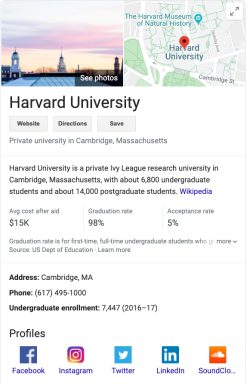
When a school reports the need to update their website, I’m the smart ass that wants to ask which one?
The school is talking about the .edu, but another word for a Facebook Page is website.
YouTube offers a website with videos. On mobile, the app seamlessly picks up where someone was on the desktop.
Google Maps is a website. It is a huge part of Google My Business, which is a massive part of the Brand Search (when people search for a school by name.
Facebook groups are a website that offers a community for newly admitted students. One of our school partners has a Facebook group that has almost 700 newly admitted students and an average of 30 posts a day.
LinkedIn offers a website that functions as an about for the school. Here is the staff, and here are the alumni, sortewd by major, skills, where they work, where they live, and how they got to where they are. That website offers an incredible look into an alumni population and is massively better than any /alumni could do. LinkedIn also offers events.
I think we’re at an age when an update of a website should include an audit for the websites out there, with a plan for addressing how they will fit into the update.
Call it the Director of Digtial presence, and give that person the role of overseeing everything on the Brand Search, and everything one desires to see on the Brand Search.
At 3E, we offer a Digital Lab that structures an entire day on this very notion of websites and a digital presence. At the end of the day, you understand how the .edu, Facebook, Google, LinkedIn, and all your other websites fit into the enrollment cycle.
How will Google and other search engines treat each of those sites?
The thing is: there are many landing pages into a school’s digital presence. When thinking about “updating” or “refreshing” a .edu, it is worth thinking about how the other websites fit into it.
One final thing: the English department does not get their own .edu. It would be silly to do that. If we thought of Facebook Pages as websites, we would agree it is equally as silly to have their own website on the Facebook platform.
Thoughts?
How to optimize your video in higher education

What happens when the world’s foremost search engine purchases a video company with crappy urls?
Google owns YouTube. Google’s magic starts with a URL. On Google, the URL is one of the key predictors for winning a search. Schools win a search for their name (called Brand Search) because most schools are school.edu, which tells Google that the school website is their website.
And while only around 3 out of 10 people who do a Brand Search actually click on the .edu, many people see it.
This post is about getting your videos seen, too.
YouTube’s URL structuring system is a hot mess of characters that mean nothing. Thus, all of the search engine weight is handled by the metadata of the video. Here are the key things to know about metadata:
Title.
This is the most important thing. Make the title an answer to a search question. If you can, get your school’s name into the title. So a virtual tour would called: School virtual tour. I know that it sounds better to say Take a virtual tour of school, but it isn’t better. Your title is for search engines, not people. And getting your school’s name to the front of the title is better for SEO.
Description.
Add a lot of it. Add video links in it:
0:34 – we tour the academic quad via a drone.
1:12 – we take a tour of academics and talk to professor Hames. (Academics are here: https://school.edu/academics)
Note: you must add https to all your links in the description to make them links. It is a rule.
At the bottom, add things like this:
If you like what you see, sign up for a real tour at https://www.school.edu/visit or /tour.
Then your about: School was founded in 1856 for the express purpose of changing the lives of young people. Our graduates have been CEO’s, entrepreneurs, academics, researchers, philanthropists, leaders of industry. You’ll find your future on our campus: join us https://www.school.edu/apply.
Tags.
You can add 4 million of these. That would take a lot of time, and after about 10, probably not help, so add 10. Tags can be: school, town you’re in, kind of university (liberal arts), do you offer graduate, time of year, etc.
Member of playlist.
All videos should be a member of at least 6 playlists. You can make more playlists. This is important for playing the next video. According to YouTube, 75% of all views come from suggested videos. If you get someone to watch your video, you want them to watch the next one. So add your videos to playlists and YouTube will more-likely offer up videos in the playlist to watch next.
Location.
YouTube allows you to locate the video, which is probably good since you have a location. A virtual tour can be located at your welcome center.
This data is as important as the video because without it, you’ll be making a video that no one will see. If you do all the above, you might even get your video featured on the front page of a Brand Search for your school.
Wouldn’t that be awesome?
Because, newly aware prospective families are more-likely to be doing a Brand Search for your school. Your awesome videos getting on the front page of your school’s SERP is a win/win.
Stream your Zoom interview directly to Facebook
That’s right. You can stream a Zoom meeting right to a Facebook Page via Facebook live.
It is easy. First, log onto the desktop version of Zoom. Under “account settings” you’ll find “Allow live streaming meetings”
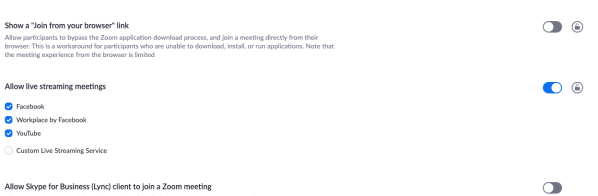
Next, log into your Zoom client. Start a meeting (I used the Personal room.)
When the meeting is launched, in the lower right hand corner you’ll see “more”.
Click it. And the connect your Facebook Profile, to Zoom. (Aside, when I did this for a major University, it was nerve wracking because it wanted to connect my profile. I was like, no not mine! but it goes in through your profile to get to the page you are an admin of. So click it.
Boom.
You can Zoom to Facebook Live.
You can also Zoom to YouTube. i think at the same time, but someone I’ll try that another time.
Why bad copy hurts your next social media post
I did a post on why you should only have one Facebook Page.
On Twitter, Mike wondered:
So here we go. To refresh, here is #4.
#4: Bad copy.
The reason is mostly bad copy. With a Facebook page to manage, an admin school ends up with the desire to feed the beast. “I need to post on Facebook.” Facebook is a marketing platform, if you only need to market 3 times a year, only post 3 times a year. More posts doesn’t mean more reach, it means more noise. I swear. You don’t have to post. In fact, posting bad content HURTS your next post.
Why does posting bad content hurt your next post?
“Hi there, it is me, the associate Dean of Faculty, and a sponsor of this amazing speaker about 3rd century history and why it pertains to the study of latin and the growth of the noble class. We need to get the word out about this preeminent scholar.”
You probably got that call, or a version of it explaining why X is the most important thing in the world and you, the head of the Facebook Page, need to “get the word out” or “get this everywhere.”
You recently convinced the History Department to shut down their magnificently inept Facebook Page, and you now feel the pressure to post about this “incredible” event — a lecture by someone who is huge in his wing of academia, but no where else.
Sadly too, you get this call about a week before the event.
The first, and very real problem, is no marketing platform can get people to an event the week before it. Heck, a major candidate for office in the Democratic primary spent millions trying to drive voters to vote for him 8 weeks before and barely did it.
No marketing platform can succeed in this situation.
But, they are unmoved by mere arguments from a professional person about things like facts, so they push to get it posted.
“If I post this today, in March, it will not get people to your event, and it will impact the institutional goals of our university. To wit, your post will impact the next post on this page, and it is an enrollment focussed post designed to get people to enroll in our school.”
Say again?
Facebook scores ads. A ten is really relevant (I got a lot of nines, never a ten) and a one is not. When Facebook redid the newsfeed, and stopped showing organic posts to fans of pages, I think it also scored posts. It doesn’t publish the numbers, but I’m convinced that it scores posts based on engagements and a low score impacts the next post (this is the formula for an ad.) So when you post the lecture from an esteemed academic, two things happen:
- Facebook doesn’t deliver your post to people because it is an event post, and Facebook has a whole wing dedicated to that art. The news feed isn’t it.
- since few people will see it, even less with engage with it. Thus, the post will get a shitty engagement score.
This bad engagement score will impact the reach of the next post.
So yes. Facebook is a battle on the news feed. Low engagement posts tell the algorithm that posts from this page don’t get engaged with, and thus, aren’t interesting to the fans on the page.
Facebook is a service. It cares little about your content, and only cares about the user experience. If your content isn’t getting engaged with, then less of your content will go to the newsfeeds of your fans.
Why you should have one Facebook Page — take 3
In 2014, I did a talk at a regional Higher Ed Web conference on why schools should only have one Facebook Page. I was high on the fact that I had closed down the Admissions Facebook Page where I was employed, and I was moving in on the English Department page, and feeling the power of being the “shut down” guy.
Then, I did a presentation in 2016 about a giving day. One of the questions I got was about how we used Facebook to drive the gifts. I pointed out that the school I worked at only had one Facebook page and people lost their shit. How did you do that, they wondered.
Now I do 3E Digital Roadmaps for clients, and each time, I recommend shutting down Facebook pages. Each time people say, “how did you do that?”
I have a list of arguments. Back in 2013, there were 13 reasons to shut down a page, but I worked at a school that really liked 13. Now it is just 10.
In some instances, new “likes” and “follows” might come in via content. But most new likes and follows will come in via other marketing, either on the website, the Search Engine Results Page, school visits, or emails to prospective students.
If one agrees that other marketing will get people to like or follow a page, then marketing one page is obviously easier. An alumni page, for example, needs other marketing to drive “likes.” Those are resources that could be applied to other efforts.
Here are 10 reasons why that decision to use finite marketing resources might not be the best move for the school.
#1: A prospective student = a student = an alum.
A school does not need an admissions page, a school page and an alumni page because the person is the same person, just at different times in the journey. When a school attracts people to the page, they become students and then alums. Schools with separate pages need to waste marketing energy attracting people – again – to a page.
#2: Confusion.
Go listen to this episode of RadioLab on “choice.” If you listened and you’re still not convinced, then okay, here goes: if the school has a Facebook page, an athletics page, department pages, a career services page, a page for the food…it confuses people. If people don’t know what to follow, the school is probably doing it wrong. At many schools, a first-year student has way too many things they could like and follow. Simplicity is better.
#3: Algorithms.
Each organic post on a Facebook Page at your school goes to about 1% of the people who like or follow the page. The reach of the page is based on engagement. That means all content created at the school is in competition with each other’s content for the attention of that student or alum. Content on the Career Services page competes for attention with content on the main page, the athletics page, and that person’s friend and family group. If there are 10 student-based pages, and each one makes 10 pieces of content a week, that is 100 pieces of content a week that the Facebook algorithm is going to deliver to people. It will deliver probably 1 or 2 of those posts. The English Department Facebook page is probably not one or two of those deliveries.
#4: Bad copy.
The reason is mostly bad copy. With a Facebook page to manage, an admin school ends up with the desire to feed the beast. “I need to post on Facebook.” Facebook is a marketing platform, if you only need to market 3 times a year, only post 3 times a year. More posts doesn’t mean more reach, it means more noise. I swear. You don’t have to post. In fact, posting bad content HURTS your next post.
#5: Reach.
The English Department Facebook page has 150 likes. The main page is on the first page of a Google Search for the school and has thousands of likes. Why not work with the people who have access to thousands of people to market your thing to more people? Caveat: a department tea, posted on Facebook, will not get people to your tea. It isn’t a magic platform, it is a marketing platform with billions of pieces of content it can send to students. Your tea will NEVER be one of them.
#6: Location.
Prospective student check in on Facebook when they tour campus. At this point, there isn’t anything we can effectively do with checkins, but events on the main page to prospective students could get them to like the page. Events by career services on the main page could get traffic to those events. One page means less confusion on where to check in, especially tours. One page means that data is taken into consideration when determining who to deliver content to. Facebook is more likely to deliver content to people who have checked in, and less likely to deliver that career services content to new students.
#7: The good times are over.
There was a time on Facebook where your English Department Tea could get people to your tea. It was the early days of Facebook, and people at conferences talked about the power of “conversations” and “engagements.” Those days are over. Facebook is approaching 3 billion people. There is an unimaginable amount of content posted on Facebook every second. While it is true that Facebook pings page admins all the time reminding them to make content, it is not true that said content will get to fans. Facebook still wants your content, but only because it needs a lot to sift through the find the best. The old days were incredible, and will never happen again. It takes work now. If you have more than one page, it takes number of pages more work to get less returns.
#8: There are already too many pages.
The Facebook Pages app helpfully says: “Pages Manager lets you manage up to 50 Pages from your smartphone or tablet.”
Oh. My. God.
#9: Analytics.
Facebook Insights are amazing, but very detailed. The csv page download has more than 50 tabs. To download a year’s worth of data is 4 page downloads (50 tabs each), 4 post downloads (10+ tabs each) and 4 video downloads. That’s 12 csv documents with more than 250 tabs. Trying to analyze the success of 10 Pages is a dystopian nightmare, so no one does it. No one looks at the best performing post, or the worst performing post. No one can really tell what that is for a school because there are so many pages. No one can really identify a strategic goal for a Facebook page other than “get the word out” which is like doing an honor thesis on “Things on the Internet.” It isn’t remotely specific or strategic. So it isn’t “getting the word out” it is getting in the way of the institutions strategic efforts to convince prospective students to visit, apply, and enroll.
#10: Facebook is becoming a better content management system.
Higher education is cyclical. Each fall, a new batch of undergraduates seek the “word” of the school. School’s can create “why visit”, “why apply,” and “why attend” posts that include the gym, career services, athletics events (spirit) and academics. Pacing those things on siloed Facebook pages that don’t get prospective student traffic means you’re trying to distract people who the enrollment department seeks to nurture.
Facebook is a good keeper of content. Posts can be reused, reappropriated, and/or repurposed. You can talk to the people who manage the Page and ask for your content to be placed in front of prospective students and students and that content can be reused at strategic times in the year. You can go back to doing what you do, instead of trying to get the “word out” on Facebook about what you do.
The reasons to attend your school are the same things that generate nostalgia from your alumni.
Get your enrollment content in the place where alumni are going to engage with it. Use Facebook Events for prospective students, and use Facebook Live to get additional viral reach. All those goals are impacted when there is more than one Facebook page.
What do you think?
Should institutions of higher education ask for reviews from alumni?
 The question is in the title. Business.Google.com, the quasi social network from Google that sits on the SERP for all colleges and universities, offers a link to send to people to get reviews. The link looks like this: https://g.page/Crush-Bottle-Shop-Hamilton/review?rc — and like this link, will take people who have a Google account to a place to automatically give a review. The aforementioned link is to my friend’s Wine Store in Hamilton, NY.
She sends the link to customers, and is getting more and more reviews and ratings.
Facebook offers a chance a reviews. 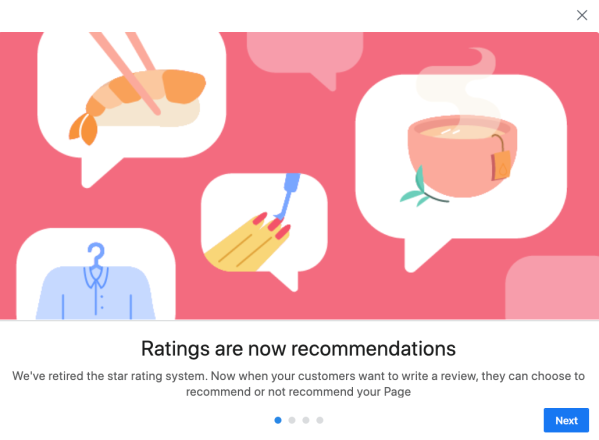

Ratings and recommendations can help fuel the page both in search (Google) and in social (Facebook).
But it probably feels weird to ask alumni to give a recommendation. If you can get past the weirdness, the positive results of reviews and recommendations can help give a boost to your enrollment marketing plans.
5 reasons Enrollment should own their Google My Business account
For higher education, Google My Business (GMB) is the little red pin that shows up at the top of the Knowledge Panel on a Google search for the name of the college.
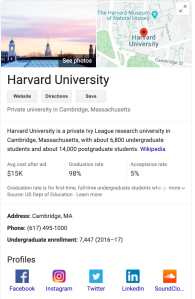 On the right is Harvard’s Knowledge Panel. It has some images, a map pin, some details from Wikipedia (usually the first sentence or two), some data Google knows, then the 5-6 profiles. Harvard has Soundcloud because they have podcasts, and someone thought people searching for Harvard might also want to listen to podcasts. Maybe.
GMB is critical for Enrollment because it pops up when people search for a school. This is the newly aware, or the people who have applied and are considering. It is new people who look at the search engine results page (SERP) and see the GMB Knowledge Panel.
That is why enrollment should own it, but here are more reasons.
So here is the list:
1. Enrollment probably has a Google Ad account. It might even be running an ad. When a school connects their Google Ad Account ot their GMB account, it opens location extensions in the ads.
2. Events. Enrollment has the most events. Controlling GMB means adding events to it. Accepted students days. Open house. Move in weekend! Add them.
3. Posts. GMB allows for image posts with a CTA. The CTA can be learn more. Students who find their way to this SERP want information. Give it.
4. Digital icons. Harvard has Soundcloud and no YouTube. I wholly recommend Facebook, Twitter, Instagram, YouTube, and LinkedIn. But I’ve seen Pinterest, Soundcloud, and Spotify.
5. Images at the top. With GMB, you can add more. Many more. Add them.
There is more to GMB, but there’s a taste. During 3EDigitalLab, we take a deeper dive into GMB for Enrollment. If you’re interested in more, you can go the contact section of 3E or connect with me on LinkedIn.


 sharemarketing.wordpress.com